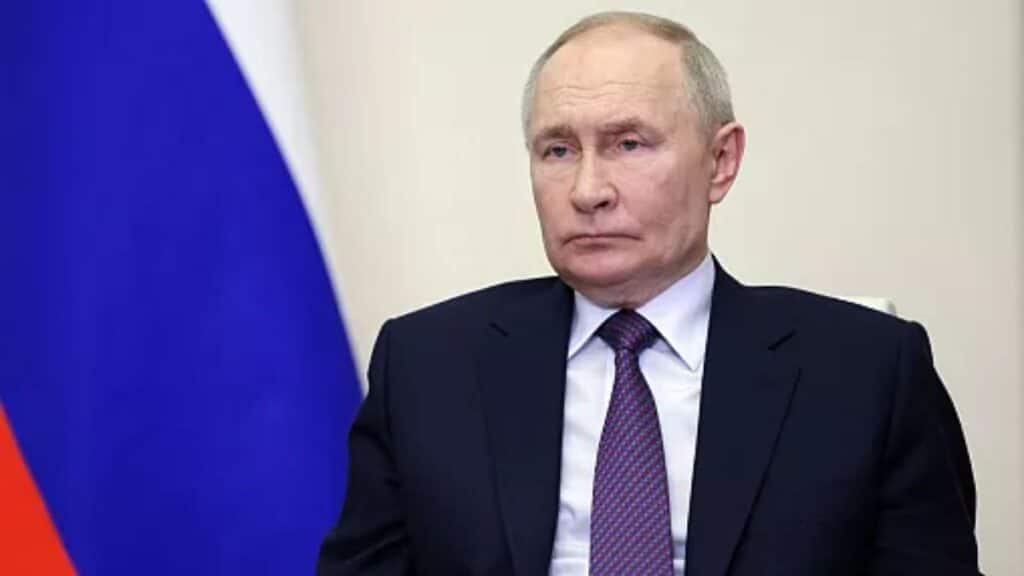
Russian President Vladimir Putin has stated that Russia is willing to negotiate with Ukraine. However, he accused Kyiv of lacking the desire to resolve legal issues. Putin emphasized that any agreement must reflect the “realities on the ground.” He also claimed that Ukrainian President Volodymyr Zelensky is not “legitimized” to lead negotiations.
Putin’s stance on negotiations
Speaking to Russian journalists, Putin said that Russia is open to discussions but questioned Ukraine’s willingness to engage in meaningful talks. “If there is a desire to negotiate and reach a compromise, anyone can conduct these negotiations,” he stated.
Putin insisted that any signed agreements must be legally validated. He asserted that Zelensky, whose term has been questioned by Russian officials, has no authority to sign any documents. “One can negotiate with anyone, but since he is illegitimate, he has no right to sign anything,” Putin said. However, he suggested appointing representatives to conduct the discussions.
Moscow’s conditions for peace
Putin reiterated that any peace deal must acknowledge the “realities on the ground.” In June, he outlined key demands for a resolution, including Ukraine’s withdrawal from the four annexed regions: Donetsk, Luhansk, Zaporizhzhia, and Kherson. Additionally, Russia insists that Ukraine abandon its NATO membership aspirations. These conditions have been rejected by Kyiv and its Western allies.
Moscow also seeks the lifting of Western sanctions, which have severely impacted Russia’s economy and restricted access to global markets. Putin argues that these sanctions hinder diplomatic progress and economic stability.
Ukraine’s perspective on talks
Zelensky’s initial peace proposal required a complete Russian withdrawal from all occupied territories. However, as Russia continues to gain ground, Ukraine has softened its stance, no longer demanding full withdrawal as a precondition for talks.
Despite this, Zelensky remains skeptical of Russia’s intentions. He believes Putin aims to prolong the conflict indefinitely. “Putin fears negotiations and strong leaders,” Zelensky said. He insists on a comprehensive agreement rather than a temporary ceasefire, which could allow Russia to rebuild its military capabilities.
Zelensky has also advocated for deploying Western peacekeeping forces in Ukraine. However, Putin rejects any temporary truce, arguing that it would enable Ukraine to receive reinforcements and supplies. He maintains that Russian troops will continue their offensive operations without pause.
The future of Russia-Ukraine relations
With both sides holding firm on their positions, the likelihood of immediate peace remains uncertain. Putin’s latest remarks suggest that Russia is open to talks, but only on its own terms. Meanwhile, Ukraine continues to seek international support to resist further territorial losses.
As tensions persist, the international community closely watches the evolving situation, hoping for a breakthrough that could bring lasting peace to the region.