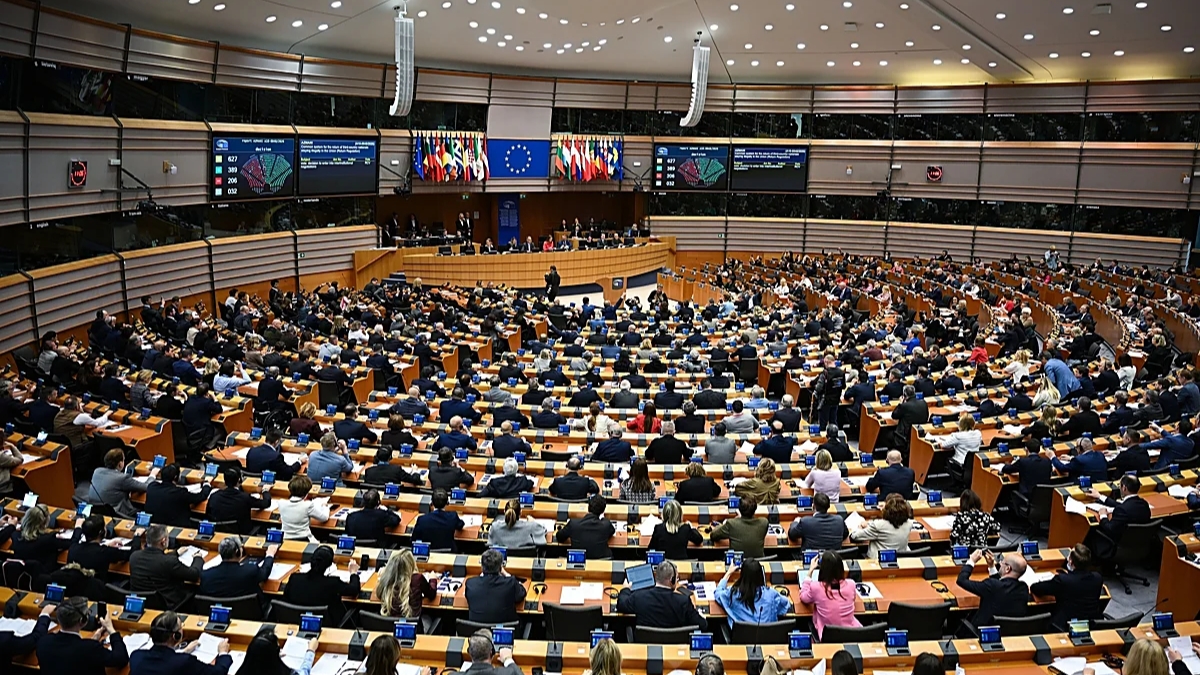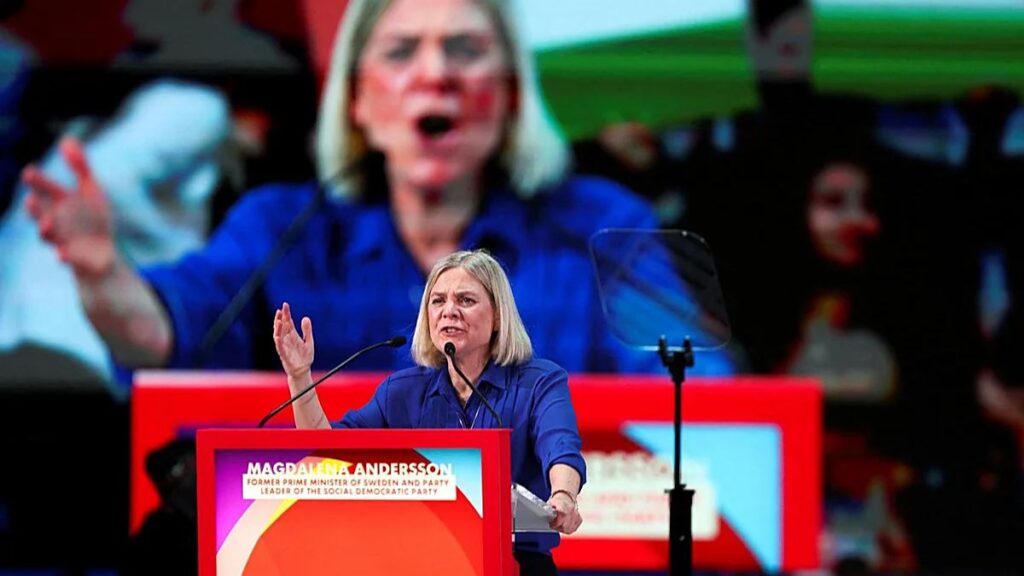
Sweden’s left-wing parties have won the election in a closely contested result. The Social Democratic Party (S), led by Magdalena Andersson, secured around 28% of the vote, while the provisional distribution of seats gives the opposition bloc a three-seat advantage.
With approximately 94.7% of the votes counted, opposition parties would hold 176 seats, compared with 173 for the parties supporting outgoing Prime Minister Ulf Kristersson.
One of the most notable features of the election has been the voting behavior of citizens of non-European background. According to the Valu exit poll conducted by Swedish public broadcaster SVT, approximately 70% of voters of non-European origin backed the left-wing bloc, which includes the Social Democrats, Left Party, Greens and Centre Party.
The vote among non-European voters
Valu’s figures reveal significant differences among the individual parties. Among voters who themselves, or whose parents, grew up outside Europe, 38% reportedly voted for the Social Democrats, while 21% supported the Left Party. The Greens received 7% and the Centre Party 4%.
The voting pattern among this group also shows a degree of continuity. In the 2022 election, support for the left-wing bloc among voters of non-European origin stood at around 68%, according to the same data.
Previous surveys among voters of Muslim background had also indicated strong support for left-wing parties. Some polls put combined support for the Social Democrats, Left Party and Greens at around 85%, with the Social Democrats alone receiving more than 61%.
A growing electoral constituency
The electoral weight of citizens of non-European origin has increased significantly over recent decades. Approximately 13% of eligible voters, close to one million people, now belong to this group.
That figure is a sharp increase compared with previous decades. In 2002, voters of non-European origin accounted for just over 3%, while in 1982 they represented around 0.3% of the electorate.
A significant part of this growth is linked to decades of immigration from the Middle East, Africa and Asia, driven by asylum, family reunification and relatively open immigration policies that remained in place for much of the period before recent restrictions were introduced.
Sweden does not include religion as a variable in its official statistics, meaning there is no precise official figure for the number of Muslim citizens. Estimates nevertheless indicate that hundreds of thousands of people have roots in Muslim-majority countries.
Immigration as a relevant political factor
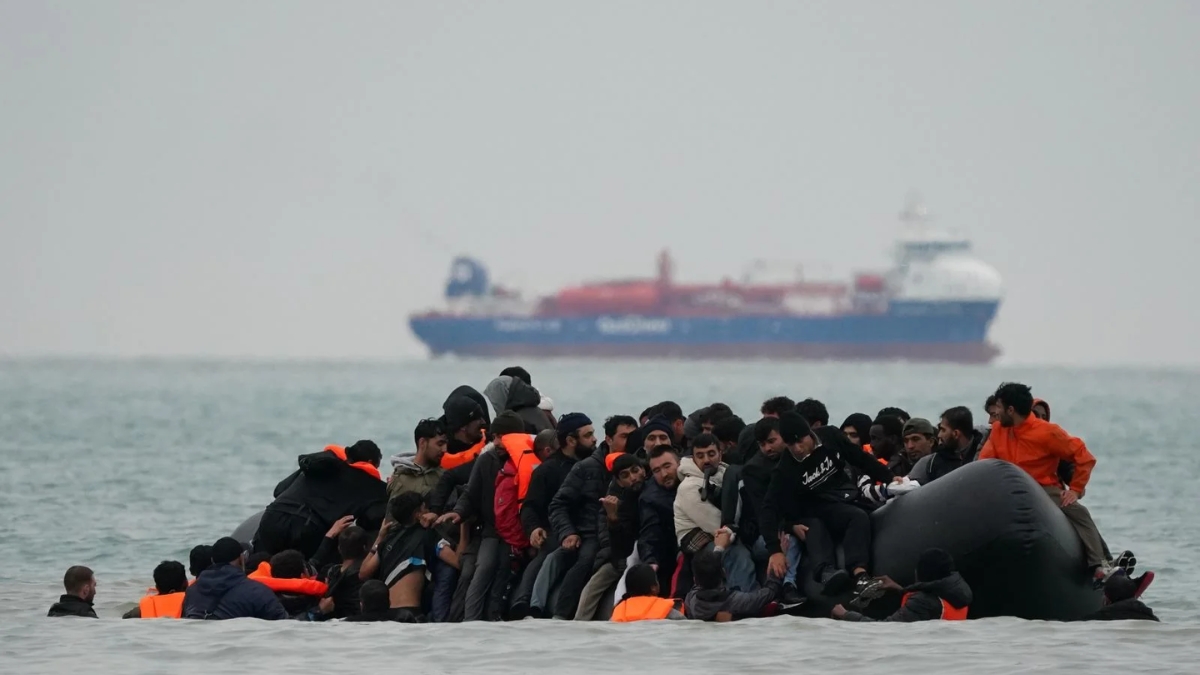
The election takes place against a backdrop in which immigration and security have become increasingly prominent issues in Swedish politics. In recent years, several parties have adopted tougher positions on migration following Sweden’s significant influx of immigrants and refugees.
At the same time, electoral data show that voters of non-European origin continue to have a clear preference for left-wing parties, particularly the Social Democrats.
The combination of demographic changes and the voting patterns of these communities is one of the factors that helps explain the current balance of political forces in Sweden.
With a provisional margin of just three seats, the result leaves Sweden facing a highly competitive political landscape and makes the behavior of different voter groups particularly relevant to understanding the victory of Andersson’s bloc.