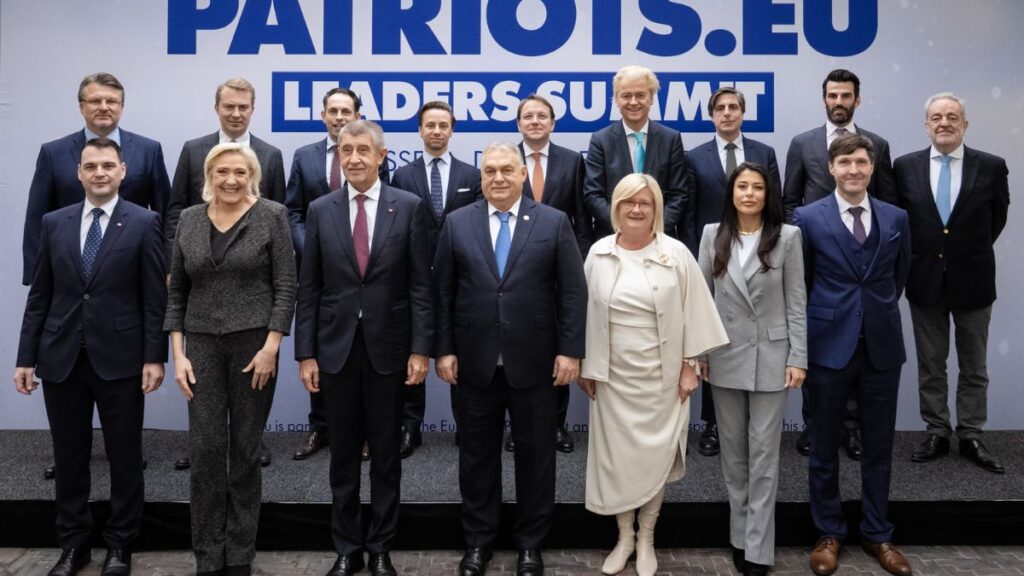
The Patriots for Europe political group has launched a sharp attack on EU institutions, accusing them of selectively applying rules, encroaching on national powers, and using EU funding to politically pressure governments and political forces that step outside the Brussels consensus.
The criticism was voiced during the “Decline of the Rule of Law in the EU” conference held at the European Parliament. Organized by Fidesz, the event brought together MEPs, researchers, and think-tank representatives from both Europe and the United States.
Tamás Deutsch, head of Fidesz’s delegation in the group, recalled his arrest under Hungary’s communist regime, declaring that he would not be intimidated by EU institutions he described as spiritual heirs to authoritarian rule.
Allegations of Centralization, Financial Blackmail, and Interference
Polish MEP Anna Bryłka denounced the progressive political centralization of the Union and accused Brussels of meddling in domestic areas such as national judiciaries. As evidence, she pointed to the annulment of the December 2024 Romanian presidential election and the withholding of EU funds to leverage political pressure. Bryłka also questioned the lack of oversight regarding the European Commission’s own democratic accountability.
Fidesz representatives further claimed that the European institutional machinery actively campaigned against Hungary through fund freezes, energy disputes, and online censorship policies.
Claims of ‘Reverse Democracy’ and the Weaponization of NGOs
German MEP René Aust (Alternative for Germany – AfD) warned of a growing climate that stifles free expression, particularly on immigration issues. Aust defined the current landscape as a “reverse democracy,” where governments use taxpayers’ money to fund ideological structures meant to influence citizens.
Echoing these concerns, Slovenian MEP Branko Grims accused European institutions of using NGOs for political warfare against the right, while holding Brussels and former German Chancellor Angela Merkel responsible for weakening border security during the migration crisis.