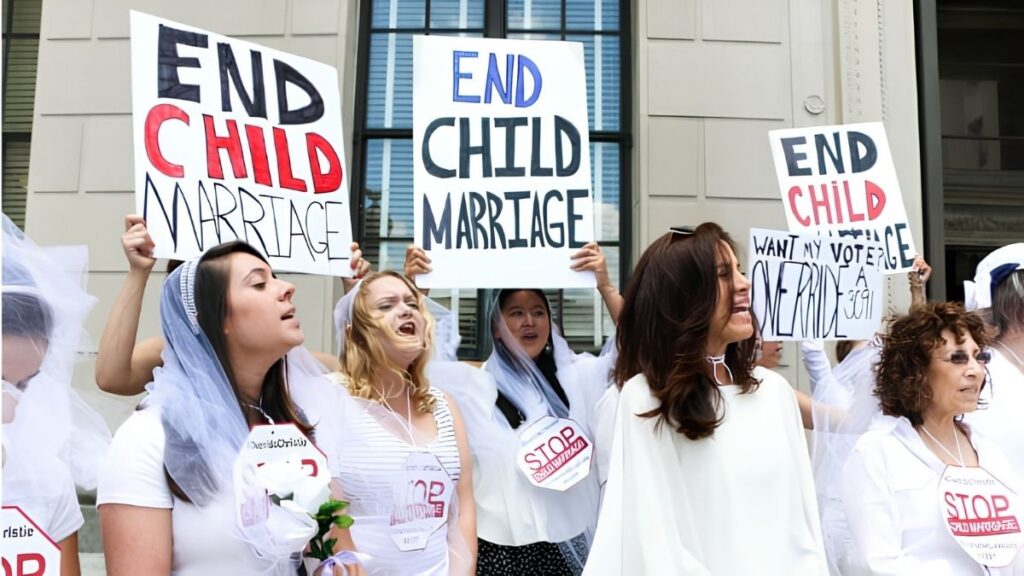
The UK’s specialist unit dealing with forced marriages received at least 100 referrals involving children aged 12 or under between 2021 and 2025, according to Home Office data obtained through a freedom of information request.
Of those cases, 27 involved children aged five or under, while 62 concerned children aged ten or under. The figures have raised concern among organisations working to combat forced marriage, particularly amid fears that some of these children may not return to school in September when the new academic year begins.
The Home Office has declined to disclose the exact age of the youngest child referred to the unit. Authorities said revealing the information could discourage other victims or families from seeking help.
A referral to the specialist unit does not necessarily mean that a marriage has taken place. Cases can involve marriages that have already occurred, plans for a future marriage or suspicions that one may take place. In cases involving very young children, referrals may also concern promises of marriage for when they become adults, known as engagements, as well as situations linked to female genital mutilation.
More than 400 cases received personalised support in 2025
The Forced Marriage Unit, jointly run by the Home Office and the Foreign Office, provided personalised support in 406 cases during 2025.
Some 163 cases, or 40%, involved people aged 17 or under, while 87 concerned children under the age of 15. Social services referred 112 cases, the police 52, and education professionals a further 25.
Overall, the unit received 1,295 contacts relating to suspected forced marriage or female genital mutilation during 2025. British authorities warn that the phenomenon remains largely hidden and that official figures may not reflect its true scale.
Pakistan tops the list of countries linked to international cases
Among the cases handled in 2025 with an international element, Pakistan was the country most frequently linked to the cases, with 165 referrals. Bangladesh followed with 36 cases, while Afghanistan accounted for 28.
The unit dealt with cases connected to 34 different countries in total. The Home Office stresses that forced marriage is not a problem specific to any particular country, religion or culture, and that there is no single profile of either a victim or perpetrator.
However, the figures show that certain communities and countries appear considerably more frequently in cases handled by the authorities. British citizens, including dual nationals, accounted for 64% of those receiving support, while another 25% were foreign nationals. Around three in four victims were women.
Forced marriages can also take place within the UK
The problem is not limited to children being taken abroad. In 2022, the unit received nine referrals involving children aged 12 or under with no international element, meaning that the potential marriage would have taken place entirely within the UK.
The same trend can be seen among cases involving people of all ages. Cases with no international element accounted for 4% of referrals in 2023 and 6% in 2024. In 2025, the figure rose to 14%, representing 58 cases.
The Home Office itself acknowledges that the figures show that forced marriages can and do take place within the UK, rather than being confined to situations in which victims are taken overseas.
Fears that some children will not return to school
Jasvinder Sanghera, founder of the organisation Karma Nirvana and a survivor of an attempted forced marriage, described the ages of some of the children identified as “deeply disturbing”.
Sanghera left her family home at the age of 14 to avoid being forced into marriage. She now warns that some children may have been “promised to someone from birth”, with the intention of formalising the marriage when they are older.
Her main concern now is what will happen when children are expected to return to school after the summer holidays. “I know that when schools open in September there will be children who are missing,” she warned.
According to Sanghera, some children may not return to the classroom, while others could come back already engaged or even married. “Cultural acceptance does not mean accepting the unacceptable. This is abuse,” she said.
Concerns over institutions’ reluctance to act for fear of racism accusations
Social policy analyst Rakib Ehsan described the figures as “the dark underside of modern multicultural Britain”.
Ehsan argues that one of the obstacles to tackling the issue is the potential reluctance of some public institutions to intervene decisively because of fears of being accused of racism or intolerance towards particular communities.
He argues that police forces, social services, schools and public authorities should put the protection of children ahead of any concerns about the political or cultural consequences of intervention.
Sanghera shares those concerns and argues that people responsible for forced marriages can themselves use accusations of racism to try to prevent authorities from taking action.
Up to seven years in prison for forcing someone to marry
Forced marriage is a criminal offence throughout the UK. In England and Wales, the Marriage and Civil Partnership (Minimum Age) Act 2022 raised the legal minimum age for marriage from 16 to 18, with the change taking effect in February 2023.
The legislation also made it an offence to carry out any action intended to cause a person under the age of 18 to marry, even where there is no physical coercion and even if the ceremony has no legal validity.
Those convicted can face a maximum sentence of seven years in prison. The Government has also said it has strengthened guidance for schools so that teachers and education staff can identify signs of potential forced marriage and other forms of child abuse.