The European Commission has signalled that its long-awaited age verification tool for online platforms is ready for deployment, stepping up its campaign to tighten child protection rules across the bloc.
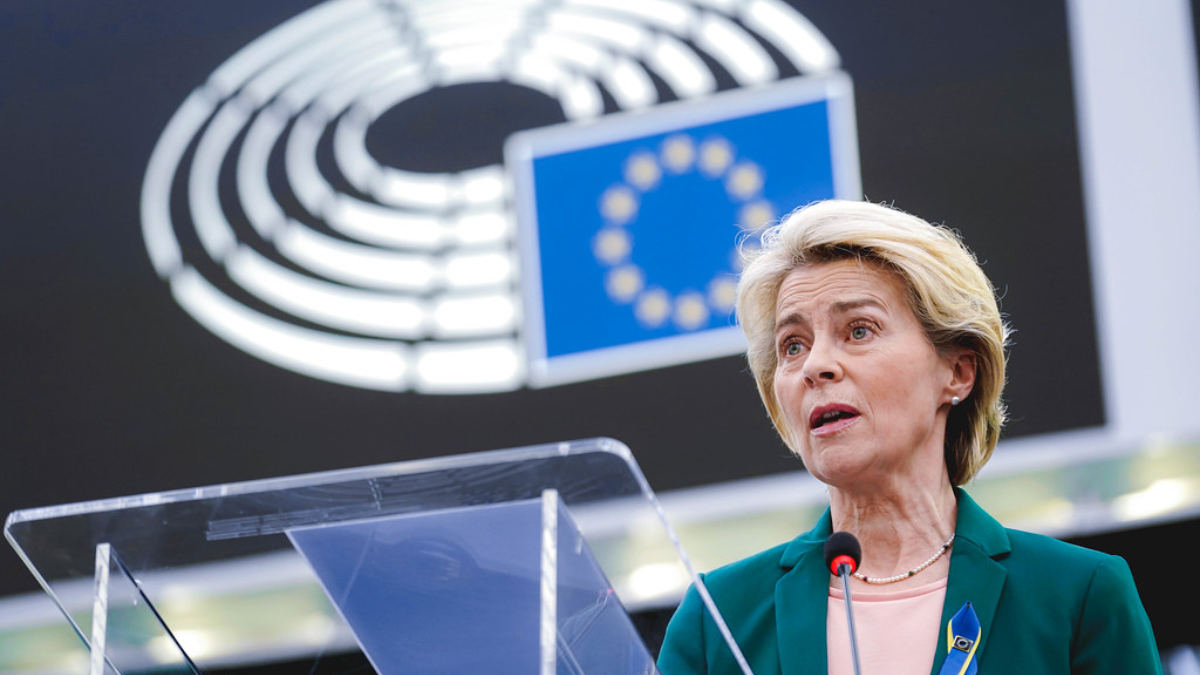
Speaking in Brussels, Commission President Ursula von der Leyen said digital platforms can no longer delay implementing safeguards for younger users, as concerns grow over harmful content and addictive online features.
According to the Commission, the system relies on privacy-focused technology that allows users to confirm their age without disclosing personal information. Through a secure process, individuals can verify their identity using official credentials while only sharing proof of age, not sensitive data.
Several EU countries, including France, Spain and Italy, are preparing to integrate the tool into their national digital identity frameworks, suggesting early alignment behind a common European approach.
Growing political momentum across Europe
The Commission’s announcement comes amid a broader push by member states to curb minors’ access to social media. Governments across Europe are increasingly concerned about exposure to cyberbullying, inappropriate content and platform designs aimed at maximising screen time.
In Greece, Prime Minister Kyriakos Mitsotakis has called for coordinated EU action, warning that fragmented national rules risk being ineffective. Athens is already preparing legislation that would restrict social media use for children under 15.
Meanwhile, lawmakers in France have advanced proposals to ban social media access for younger teenagers and limit smartphone use in schools. French President Emmanuel Macron has also pushed for a joint European response, reflecting growing political urgency on the issue.
Toward a unified EU framework
Brussels is aiming to avoid a patchwork of national systems by promoting a single, open-source verification model that can be adopted across the EU. Officials argue that a harmonised solution would simplify compliance for platforms while strengthening regulatory enforcement.
However, key questions remain unresolved. The Commission has yet to outline a clear timeline for full implementation or confirm whether adoption will be mandatory for technology companies.
The initiative is primarily targeted at major platforms such as TikTok, Meta and Snapchat, which are already under scrutiny for potential breaches of the Digital Services Act, the EU’s flagship digital regulation.
Recent investigations into several platforms, including concerns over child safety protections and algorithmic design, have intensified pressure on the sector. By introducing a standardised verification tool, Brussels is seeking to close regulatory gaps and force companies to act.
For EU officials, the message is straightforward: with a technical solution now on the table, responsibility shifts firmly onto platforms to ensure safer digital environments for younger users.