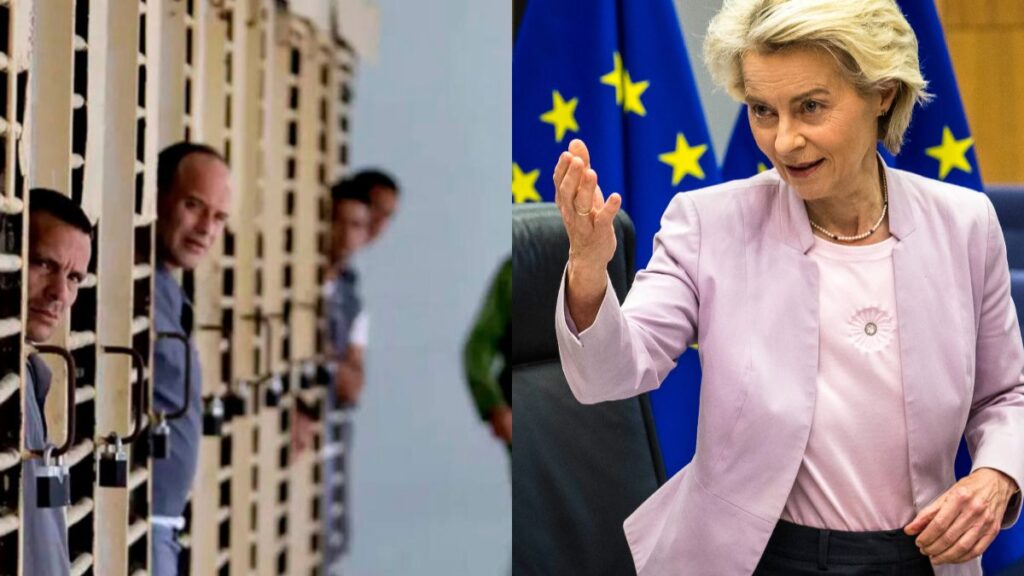
A damning report by Prisoners Defenders has exposed what it describes as a system of modern slavery in Cuba, where at least 60,000 prisoners are forced to work in inhumane conditions to sustain the Castro regime’s economic apparatus.
The organisation documents how prisoners, both political and common, are employed in the production of marabou charcoal and tobacco for export, mainly to Europe. Under threats, violence and physical punishment, prisoners work up to 12 hours a day without real wages or labour rights, in what the NGO describes as an ‘institutionalised system of forced labour’.
Among the abuses reported are beatings, isolation, food deprivation and psychological pressure against those who refuse to cooperate. According to the report, the regime turns prisons into veritable labour camps, guarded by armed guards and designed to generate profits that prop up the dictatorship’s economy.
Prisoners Defenders points out that this is not an isolated case, as the Cuban tyranny has already been denounced for the exploitation of doctors on international missions, another form of forced labour recognised even by the United Nations. The difference now is that the scale of the prison system highlights the magnitude of the business: tens of thousands of prisoners turned into slaves of Castroism.
The report calls for an immediate response from the international community and points the finger directly at the European Union, accusing it of complicity in allowing products tainted by human exploitation to continue to enter the European market.
Far from suspending relations with Havana, the EU’s High Representative for Foreign Affairs, Kaja Kallas, declared at the end of August that the Commission will maintain the Political Dialogue and Cooperation Agreement (PDCA) with Cuba, refusing to activate the human rights clause that would lead to its suspension.
The response was addressed to a letter signed by VOX MEPs such as Hermann Tertsch and Jorge Martín Frías, who called for an end to the policy of appeasement towards the dictatorship. Kallas, however, defended the agreement as still being ‘a useful tool’ and went so far as to blame the Cuban crisis on the US embargo, buying into the official line from Havana.