EU foreign ministers block push to freeze Israel trade deal amid war crimes allegations
Efforts by Spain, Ireland and Slovenia to suspend the EU–Israel Association Agreement over alleged war crimes in Palestine and Lebanon failed to gain the backing required from EU foreign ministers on Tuesday, exposing once again the bloc’s divisions over how to respond to the conflict. Nevertheless, ministers agreed that a separate initiative targeting goods produced in Israeli settlements would be passed to the European Commission for further examination.
Meeting in Luxembourg, foreign ministers stopped short of endorsing any move to suspend Israel’s preferential trade status with the European Union, despite growing criticism from several member states over the humanitarian situation in Gaza and rising violence in the West Bank.
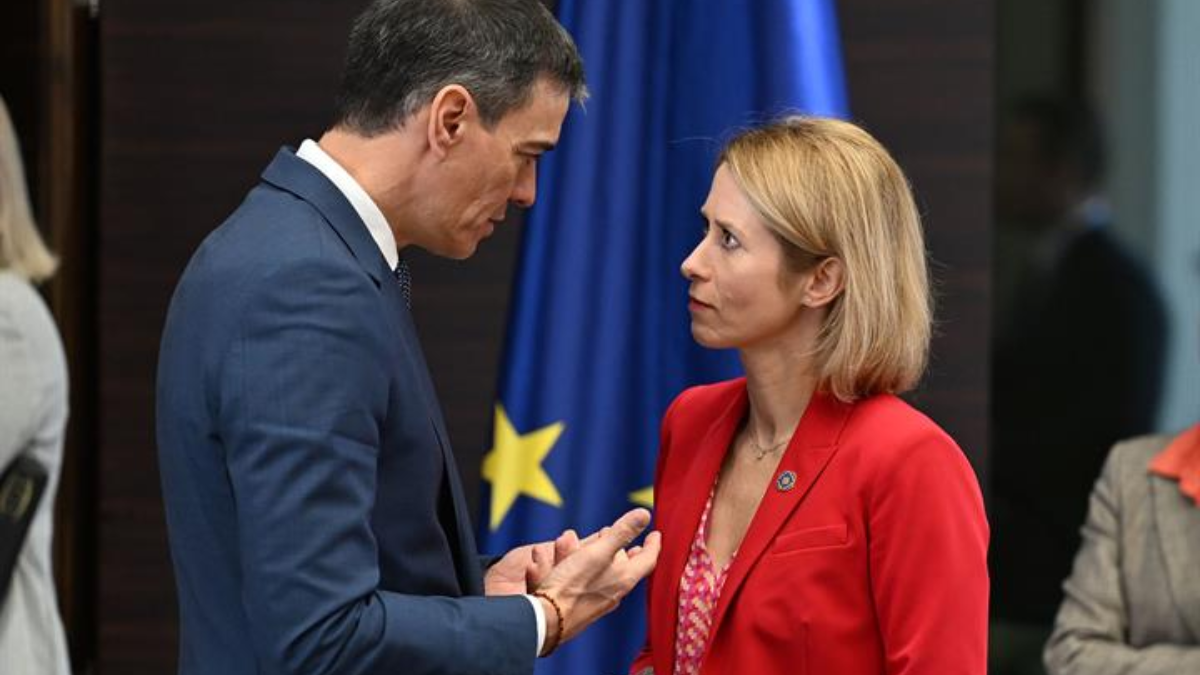
Speaking after the talks, EU foreign policy chief Kaja Kallas said member states had not shifted their positions enough to support either a full or limited suspension of the agreement. She added, however, that discussions would continue, including on a proposal put forward by France and Sweden to introduce tariffs on products originating from Israeli settlements in the occupied Palestinian territories.
“We cannot lose sight of Gaza and the West Bank,” Kallas told reporters.
Three countries call for tougher action
Ahead of the ministerial meeting, Spain, Ireland and Slovenia had urged the EU to act in line with what they described as its “moral and political responsibility”, arguing that the bloc must defend the core principles on which it was founded.
In a letter addressed to Kallas, the three governments said the humanitarian conditions in Gaza had become unbearable, citing repeated violations of the ceasefire and the insufficient delivery of aid into the territory. They also warned that the situation in the West Bank was worsening rapidly, pointing to mounting violence against Palestinians and accusing extremist settlers of operating without accountability.
Under EU rules, a full suspension of the Association Agreement would require unanimous approval from all 27 member states. A partial suspension would need the support of a qualified majority, representing at least 55% of countries and 65% of the EU population.
No consensus among major member states
The failure of the proposal had been widely expected, with major EU powers such as Germany and Italy not seen as likely to support such a step. Even so, criticism of Israel’s military actions and recent political developments has intensified in some European capitals. Germany, among others, has voiced concern over the trajectory of events in the Palestinian territories.
A spokesperson for German Chancellor Friedrich Merz said the leader had recently conveyed his “deep concern” over the situation during a phone call with Israeli Prime Minister Benjamin Netanyahu. According to the spokesperson, Merz warned that there must be no “de facto partial annexation” of the West Bank.
Kallas also dismissed accusations that the EU was applying a double standard in its approach, insisting that the bloc remains one of the main providers of assistance to Palestinians, including support for reconstruction.
“Compare how much others are doing for Gaza and Palestinians,” she said, “and you will see that many are turning to the EU for support.”
She confirmed that the proposal on settlement goods would be referred in the coming days to EU trade commissioner Maroš Šefčovič, on the grounds that settlements do not fall under the scope of the current EU–Israel agreement.