On Tuesday, the heart of Berlin experienced a day marked by chaos and insecurity. Tens of thousands of residents were left without electricity after an act of sabotage in the Johannisthal neighbourhood, in the south-east of the German capital.
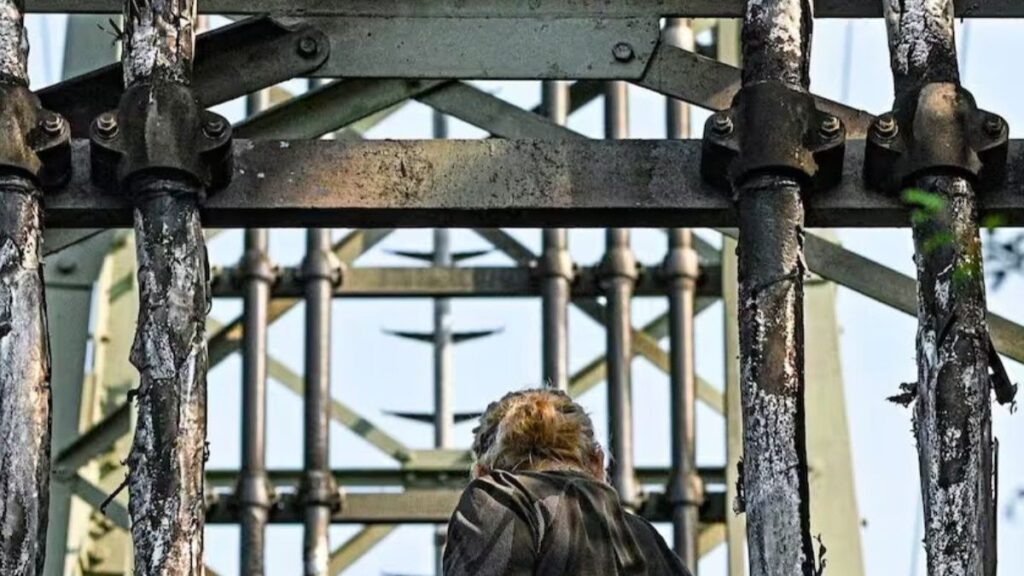
Two high-voltage pylons on Königsheideweg street were deliberately set on fire. According to the police, the perpetrators used petrol to set fire to the cables, causing a blaze that lasted for an hour and destroyed part of the city’s critical infrastructure.
Investigations point to a politically motivated extremist attack. Shortly afterwards, a letter published on a radical left-wing platform claimed responsibility on behalf of ‘some anarchists’. The text stated that the target was the Adlershof science park, which houses technology, robotics and defence companies, which the saboteurs described as a ‘military-industrial complex’.
The blackout affected some 50,000 customers, including 42,000 households and 3,000 businesses in the districts of Altglienicke, Grünau, Adlershof, Spindlersfeld, Alt–Johannisthal and Oberschöneweide. The consequences were immediate: the 110 and 112 emergency numbers were rendered unusable in parts of the affected areas, forcing the authorities to deploy mobile contact points. Public transport was also paralysed, with traffic lights out of service and trams disrupted, while schools, nursing homes and even fire stations were left without electricity.
This is not an isolated incident. Left-wing extremism has made infrastructure a recurring target in Germany. In 2024, the group ‘Vulkangruppe’ (Volcano Group) attacked a Tesla factory in Brandenburg. Since 2011, this radical organisation linked to the Antifa movement has claimed responsibility for sabotage against railway tracks, data cables and company vehicles, under the umbrella of an anti-capitalist and environmentalist discourse that justifies violence against society.
The latest attack highlights the fragility of German energy security and the impunity with which violent far-left groups operate in the heart of Europe.