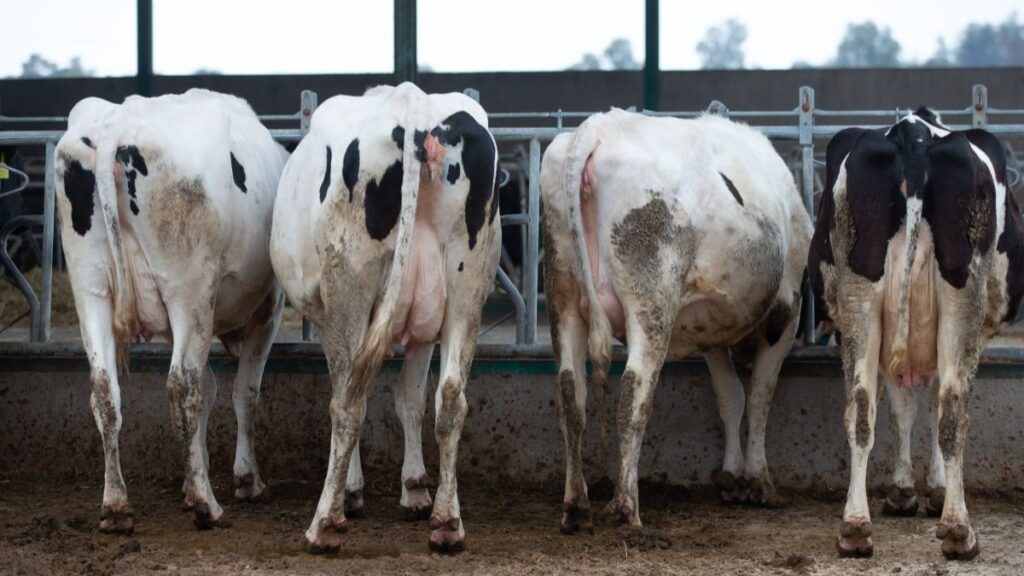
The crisis surrounding Denmark’s “climate feed” Bovaer is now making waves beyond the country’s borders. Testimonies from Danish farmers—describing fevers, cramps, infections, falling production, and even deaths in their herds—have prompted growing concern in the United Kingdom. Produced by Dutch multinational DSM-Firmenich and promoted in “net zero” programs by Tesco, Aldi, and Morrisons, the product is now under international scrutiny, challenging the triumphant narrative that accompanied its launch.
The connection between the two countries lies in the observed effects on the ground. Danish experience has been crucial for British farmers, who are now cautiously assessing a supplement designed, in theory, to alter rumen digestion and reduce methane emissions.
Meanwhile, the Danish case continues to drive debate. Farmer Anders Ring, who participated in a trial organized by Arla, reported that some cows collapsed, the bacteriological quality of the milk deteriorated, and herd production quickly declined. He abandoned the supplement after just one month. His account has amplified concerns among producers closely monitoring the results of Arla’s recently completed UK trial.
The UK’s Food Standards Agency (FSA) has taken note. The agency confirmed it is closely monitoring incidents reported in Denmark and assessing their potential implications for the country’s dairy sector. Both the FSA and the European authority had previously approved Bovaer as “safe” for animals and consumers, highlighting the challenge: real-world farm experiences are now calling into question a product that had received regulatory endorsement before large-scale rollout.
The controversy has already reached other European countries. In Norway, where the government had planned to introduce Bovaer to all dairy cows by 2027, the state-owned cooperative Tine—which dominates the country’s dairy market—has suspended implementation. The decision does not follow formal complaints but reflects the need for thorough investigation of reports coming from Denmark, which are gaining increasing prominence in the European debate.
Meanwhile, Dutch multinational DSM-Firmenich continues to defend the supplement, citing more than fifteen years of research and claiming no scientific evidence of harm to livestock. At the same time, the company acknowledges it is investigating reported cases and cooperating with Danish authorities and Aarhus University, responsible for analyzing affected animals.
The controversy comes at a time when several European governments are ramping up climate measures targeting livestock. Political efforts to reduce methane emissions have elevated Bovaer to a “green” solution, but the facts on the ground tell a different story. Experiences in Denmark, alongside early warning signs in the UK, raise a fundamental question: to what extent do Brussels-driven climate policies prioritize ideological goals over animal health and the survival of farms?