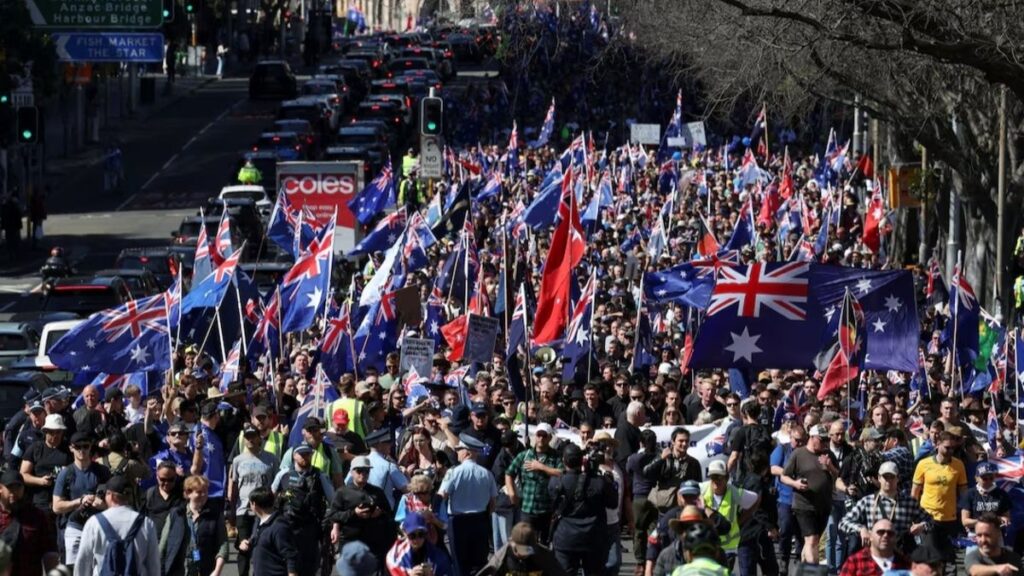
Thousands of Australians Have Participated in Protests Against Mass Immigration Across the Country in an Event Called the March for Australia, Which Drew Crowds in Major Cities Like Sydney, Melbourne, and Adelaide. In some areas, clashes occurred with far-left groups, although the police deployed a large number of officers to prevent the incidents from escalating. In Sydney, the public broadcaster ABC estimated attendance at around 8,000 people, while in Adelaide the presence of approximately 15,000 people—including both protesters and counter-protesters—was reported, with the overall situation remaining calm.
Authorities had already warned earlier in the week that they would not tolerate “expressions of hate.” Interior Minister Tony Burke stated that those seeking to sow division “have no place in our country” and emphasized that the true Australian identity is incompatible with such marches. Meanwhile, Minister for Multicultural Affairs Anne Aly stressed that the nation will support all its communities, “regardless of their background,” against those who attempt to intimidate them.
In Melbourne, the atmosphere was more tense: march participants crossed paths with a pro-Palestinian protest. Among the speakers was Thomas Sewell, a patriot who addressed the crowd in front of the state Parliament. Protesters were also seen carrying banners in support of Dezi Freeman.
The movement included opposition politicians such as Pauline Hanson, senator of the One Nation party, and Bob Katter, a federal MP. Several of the organizers come from the sovereign-right wing and groups opposed to pandemic-related health restrictions.
The organizers of the March for Australia justify their protests in a statement, denouncing that mass migration “has broken the cohesion of communities.” They also expressed concern over pressures on housing, transportation, wages, hospital care, crime, and environmental degradation.