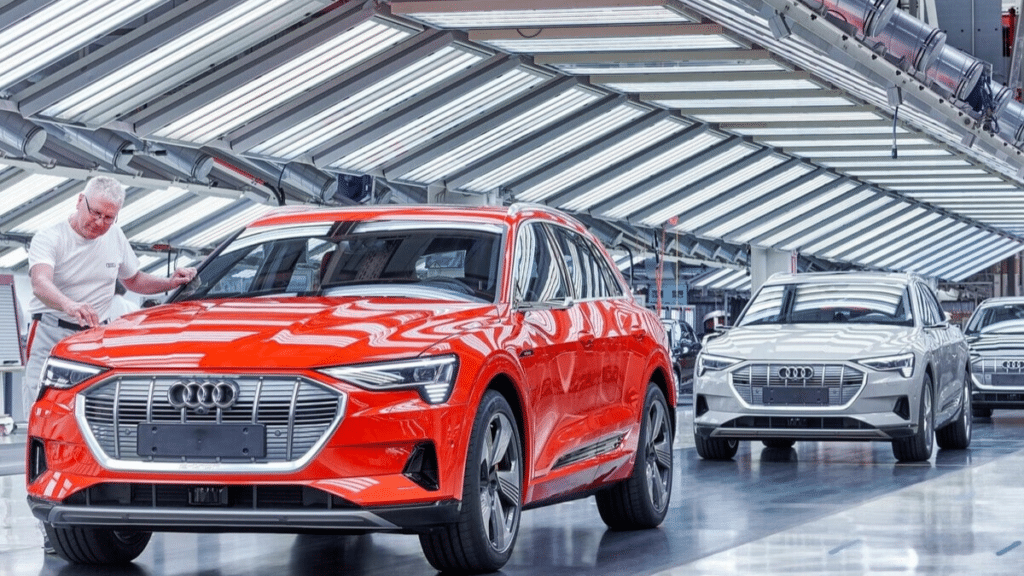
The multinational automobile manufacturer Audi has announced it will lay off 7,500 workers in the coming years due to a decline in sales following its push for electric vehicles. The measure will exclusively affect employees in Germany and will be implemented gradually until the end of 2029. The company has reached an agreement with union representatives after months of negotiations, during which the possibility of eliminating up to 12,000 jobs was even considered.
With this restructuring, Audi aims to optimize its operations and reduce costs by over one billion euros annually in the medium term. CEO Gernot Döllner has defended the need to make the company “more dynamic, efficient, and competitive,” something he believes cannot be achieved without adjustments to the workforce. Despite the layoffs, the company has committed to not making forced dismissals until 2033, thus extending the job guarantee that was previously only secured until 2029.
The cuts will focus on the administrative sector and will not affect production lines. According to Human Resources Director Xavier Ros, the workforce reduction will be strategically planned to align with the company’s future needs. The restructuring will be carried out in two phases: 6,000 positions will be eliminated before 2027, and the remaining 1,500 will be phased out by the end of 2029. The geographical distribution of the cuts between the Ingolstadt and Neckarsulm plants has yet to be finalized.
In addition to the workforce adjustment, Audi employees will be affected by other cost-cutting measures. The company will modify its profit-sharing scheme, gradually reducing the financial compensation employees receive. In 2024, the bonus for the 2023 fiscal year amounted to 8,840 euros per employee, but a significant reduction in this amount is expected in the coming years.
Audi’s financial situation has been impacted by various factors, including the under-demanded electric vehicle push, a shortage of key components for its engines, a slowdown in demand in the Chinese market, and the potential closure of its Brussels plant. In the first nine months of the last fiscal year, the company experienced a nearly 50% drop in profits, which has led to the implementation of drastic measures to stabilize its business.
Related news