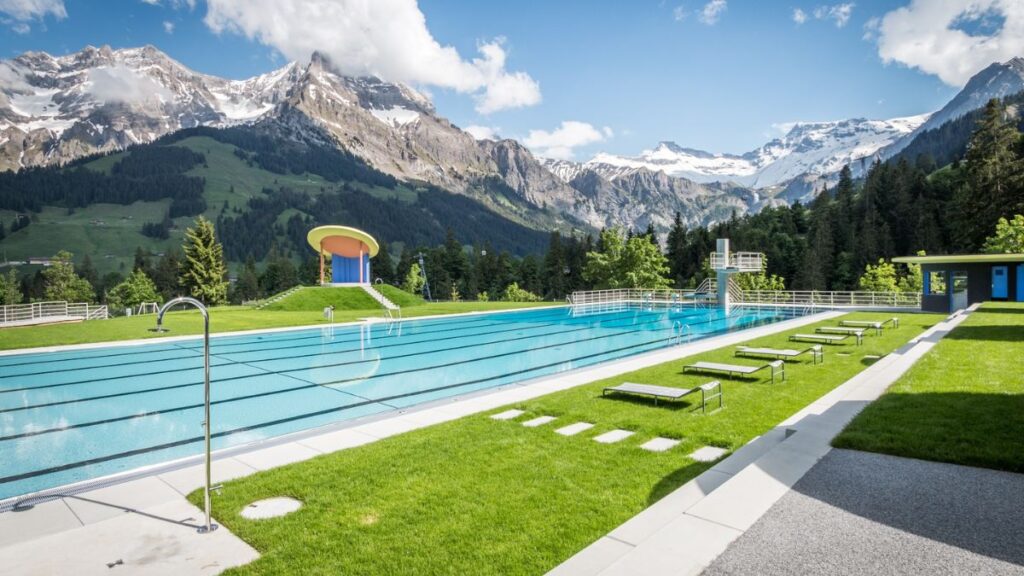
Several public swimming pools in some Switzerland towns, notably Porrentruy, have decided to take measures in response to the increase in insecurity by temporarily banning access to those who do not reside in the country. The measure, which will remain in effect throughout the summer, restricts entry exclusively to Swiss citizens, people with a residence or work permit, and certain tourists staying in local hotels or campsites who have a special identification card.
The decision comes after a series of incidents at the outdoor municipal pool in a small town in the canton of Jura, near the French border. According to authorities, the conflicts have mostly involved young people from neighboring French towns, particularly from the departments of Doubs and Territoire de Belfort (most of North African origin).
Among the reported incidents are episodes of harassment of women, aggressive behavior, offensive language, and confrontations with security staff. There have also been reports of people swimming in underwear instead of proper swimwear, and even incidents of nudity, all of which have contributed to an atmosphere that many users consider disrespectful and not family-friendly.
The head of recreational activities for the district and mayor of Boncourt, Lionel Maitre, stated that although not all those involved were French, the majority did carry French identification. Despite having strengthened security by hiring additional guards, the authorities acknowledge that these measures were insufficient to prevent the incidents.
In response to this situation, the local council has chosen to implement stricter access control at the pool, requiring proof of residence in Switzerland or a direct connection to the country. The mayor of Porrentruy, Philippe Eggertswyler, defended the decision, stating that the motivation is not discriminatory but purely preventive. ‘This is not about racism. It’s about protecting our residents and ensuring a peaceful environment for everyone,’ he said.
Switzerland has already had similar experiences in other cantons. In cities like Basel, for example, security guards, and even police, have also been deployed at recreational facilities during the summer months to prevent disturbances and safeguard coexistence.
The authorities hope that the reopening of the public swimming pool in the French town of Delle, just across the border and scheduled for July 8, will ease the pressure on Swiss facilities. However, they do not rule out the possibility that the problems could reoccur if preventive measures are not also implemented on the French side.