Greece Becomes Europe’s New Gas Gateway
For decades, Greece’s northeastern region of Thrace sat at the margins of Europe’s political and economic map. Today, however, Alexandroupolis is emerging as a central node in the EU’s post-Russia energy strategy.
As Brussels moves toward ending imports of Russian oil and gas by 2028, member states are redesigning supply routes. In that shift, liquefied natural gas (LNG) is becoming a cornerstone of diversification, and Greece is seeking to position itself as a primary entry point.
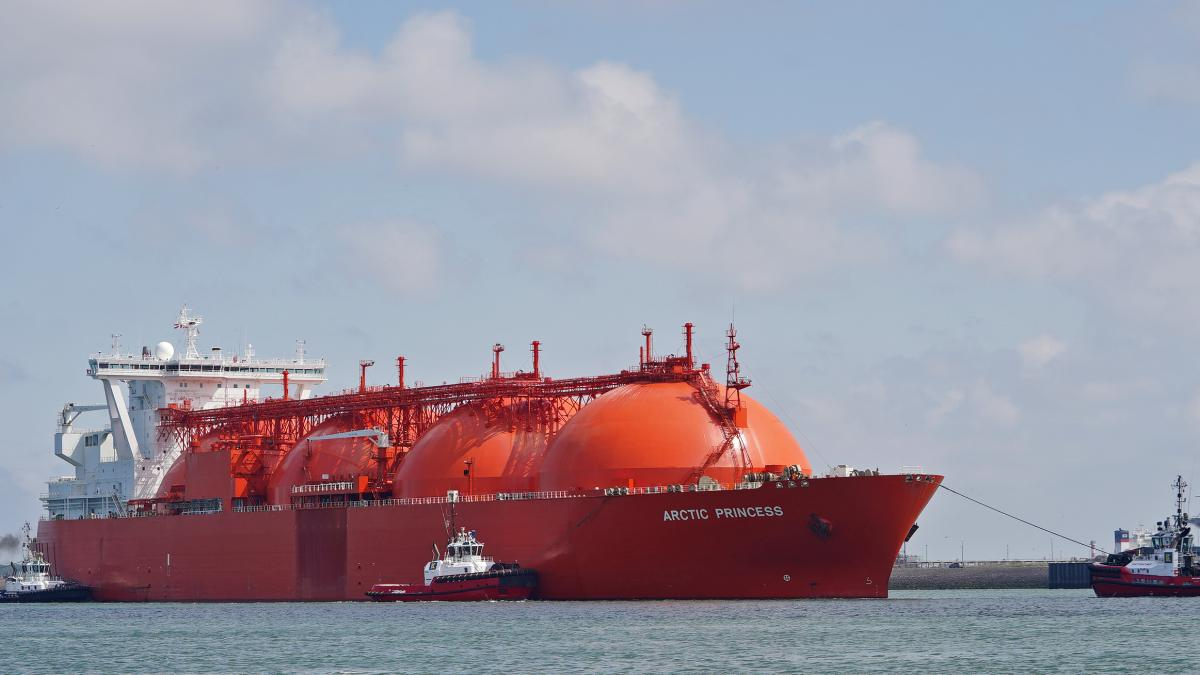
At the centre of this strategy is the floating storage and regasification unit (FSRU) in Alexandroupolis, which began commercial operations in late 2024. The facility allows LNG shipments — largely from the United States and other non-Russian suppliers — to be converted into gas and injected into European pipeline networks.
Gas as a bridge fuel in Europe’s transition
Despite long-term decarbonisation goals, policymakers acknowledge that natural gas will remain essential in the medium term, supporting grid stability and industrial demand while renewables scale up.
The reduction in Russian supplies has created a structural gap in central and eastern Europe. By 2030, the region could require an additional 35 billion cubic metres (bcm) of gas annually to compensate for lost volumes.
Countries able to facilitate new supply routes stand to benefit through transit revenues, trading activity and increased geopolitical leverage.
Greece’s answer is the “Vertical Corridor”, linking the Alexandroupolis FSRU and the Revithoussa LNG terminal to pipeline systems in Bulgaria and Romania, with onward flows possible toward Hungary, Slovakia, Moldova and potentially Ukraine.
Greek officials argue the corridor strengthens regional energy resilience and diversification.
Expansion plans and financial challenges
Athens is now considering a second floating LNG unit near Alexandroupolis. The project, backed by Gastrade, has already secured environmental approval from Greek authorities.
The proposed FSRU Thrace would expand capacity beyond the current facility’s maximum annual regasification of 5.5 bcm. However, the estimated cost — close to €600 million — raises significant financing questions.
Funding is complicated by the cautious position of the European Commission, which has limited support for new gas infrastructure in light of climate neutrality targets.
Several member states and industry players, however, argue that gas infrastructure remains indispensable during the transition, particularly as countries such as Romania develop new domestic production.
US backing and geopolitical stakes
The United States has expressed interest in supporting expansion through financial institutions such as EXIM and the US International Development Finance Corporation, viewing the corridor as a channel for increasing US LNG exports to Europe.
A meeting hosted by the US Department of Energy later this month is expected to focus on strengthening cooperation along the Vertical Corridor, with European officials and regional ministers in attendance.
For Greece, the transformation of Alexandroupolis into an energy hub carries strategic implications beyond economics. The project positions the country as a key gateway in Europe’s reconfigured gas network.
As Brussels debates the future of gas financing in 2026, developments in Thrace may serve as a test case for how the EU balances energy security, diversification and climate commitments in a post-Russia landscape.