Can the EU’s Generative AI Ambitions Survive Contact with Reality?
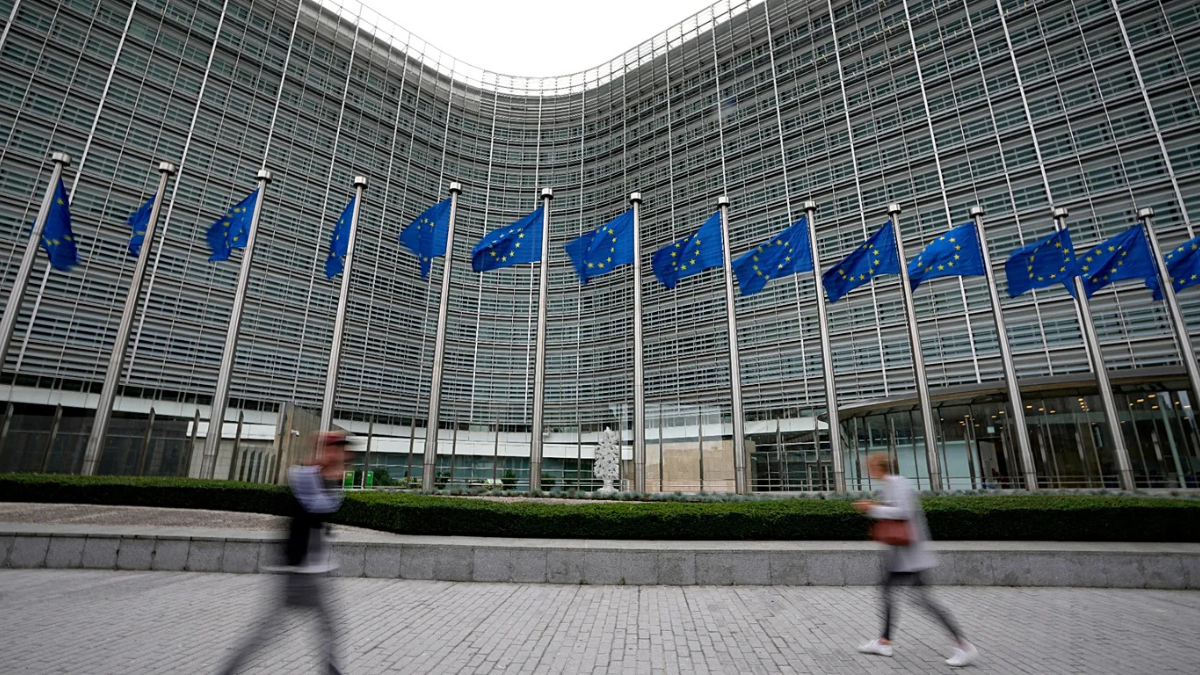
The European Union is locked in an existential crossroads over the future of artificial intelligence. While the European Commission champions tech sovereignty, strict ethical guardrails, and regulatory leadership, the stark realities of the global generative AI (GenAI) market threaten to dismantle these ambitions.
With the EU AI Act now fully operational and computing demands skyrocketing globally, industry analysts and venture capitalists are questioning whether Brussels’ policy-first strategy can withstand pragmatic global competition led by the United States and China.
1. The Regulatory Maze: Protection or Innovation Bottleneck?
The bloc’s flagship regulation, the AI Act, was designed as the global “gold standard” to mitigate ethical risks, misinformation, and copyright infringement. However, for startup founders across Paris, Berlin, and Amsterdam, the administrative burden of compliance audits, training data traceability, and risk management models is draining critical capital that would otherwise fund R&D.
While American firms benefit from massive capital injections without immediate compliance restrictions, European startups are reportedly allocating up to 30% of their early-stage budgets strictly to legal and regulatory compliance.
2. The Compute and Energy Bottleneck
The second collision with reality is physical. Training and deploying large language models (LLMs) requires hundreds of thousands of high-performance GPUs and immense power consumption. The EU’s “AI Factories” scheme—designed to grant startups access to public supercomputers—is moving at a bureaucratic pace that contrasts sharply with market realities.
Furthermore, grid constraints and Europe’s broader energy transition hinder the rapid construction of gigawatt-scale data centers, which are currently being built at record speed across US states like Virginia and Texas.
3. “Sovereignty” Backed by American Capital
A defining dynamic in 2026 is the growing interdependence between Europe’s top AI prospects and Silicon Valley incumbents. Strategic partnerships and distribution deals between tech giants like Microsoft, Amazon, or Google and leading European firms show that without US cloud infrastructure, European AI solutions struggle to scale commercially.
This paradox leaves the EU in a delicate position: preaching digital self-reliance while its most promising developments ultimately run on servers and platforms governed by US jurisdiction.
4. Where Does the European Model Go From Here?
Despite the headwinds, industry experts suggest Europe’s path forward isn’t competing directly on massive general-purpose foundation models. Instead, the opportunity lies in vertical and specialized AI—such as healthcare, heavy industry, robotics, and industrial automation—where European standards on privacy and high-quality industrial data provide a genuine competitive edge.
The central question for the coming years is not whether the EU can build the next ChatGPT, but whether its regulatory framework will allow its broader economy to adopt AI in time to remain competitive on the global stage.