Meloni reaffirms alignment with Orbán on Europe’s political direction
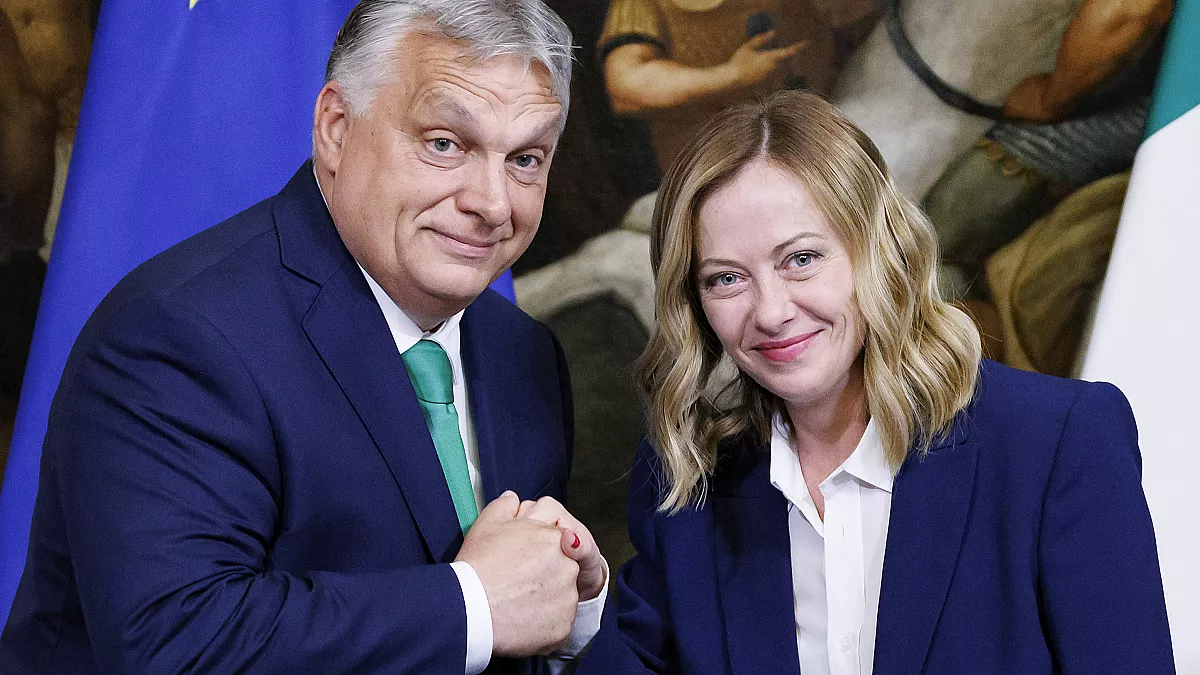
Italian Prime Minister Giorgia Meloni has reiterated her political alignment with Hungarian leader Viktor Orbán, highlighting shared priorities on sovereignty, security and the role of traditional values within Europe.
In a message delivered earlier this year during a political event organised by Hungary’s ruling party Fidesz, Meloni underlined the long-standing relationship between the two leaders, pointing to years of cooperation on key political issues.
She acknowledged that while their positions do not always fully coincide, their partnership is grounded in what she described as common principles and mutual understanding.
“We have fought many battles together,” Meloni said, adding that differences on certain matters have not undermined a broader alignment based on “shared values and a common vision.”
Shared vision for Europe
Meloni stressed that both leaders support a model of Europe centred on national sovereignty and cultural identity, arguing that the European project should respect the traditions and values of its member states.
She also referred to historical and symbolic links between Italy and Hungary, noting that both countries share elements of cultural heritage reflected in their national identities.
According to Meloni, the future of Europe should be built on a framework that recognises the diversity of its nations while preserving their autonomy.
Focus on borders, security and family
In addition to institutional questions, Meloni highlighted areas of policy convergence with Orbán, particularly on border control and internal security.
She argued that Europe should strengthen its ability to manage migration and protect its external borders, describing these issues as central to maintaining stability across the continent.
Meloni also pointed to the importance of supporting the family as a fundamental social unit, a theme that has been a recurring element in both leaders’ political agendas.
Her remarks reflect a broader alignment between Rome and Budapest on several key debates shaping the European Union, including the balance between integration and national sovereignty, as well as the role of cultural and social values in policymaking.